
Stainless Steel vs Painted Steel Electrical Cabinets: Differences, Advantages and Maintenance
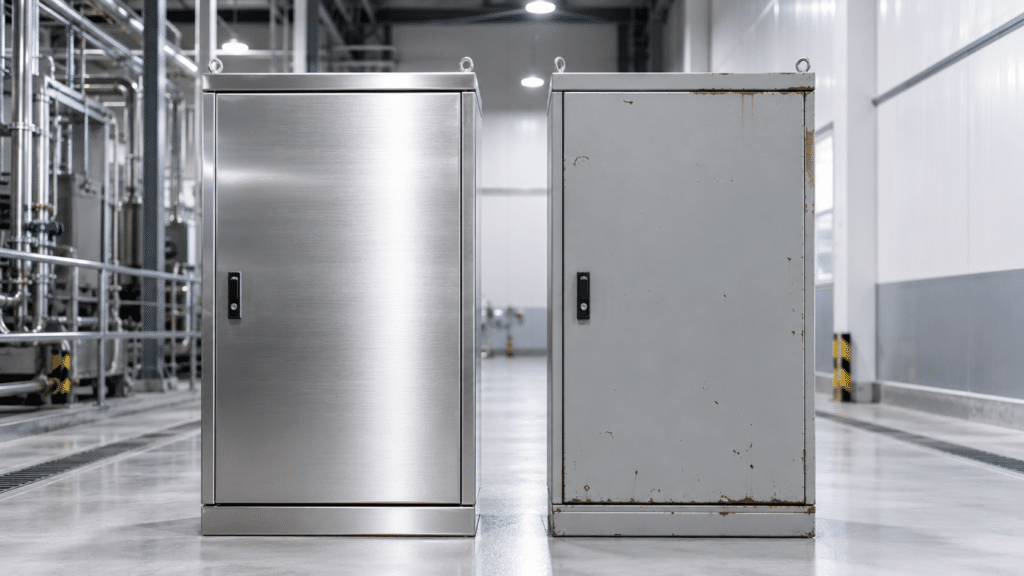
When it’s time to specify which electrical cabinet to use, the decision about the material rarely gets the attention it deserves. It’s resolved almost out of habit: if the budget is tight, painted steel; if the client asks for something “resistant,” a stainless steel cabinet. But that way of deciding leaves out the question that really matters, which isn’t how much the cabinet costs today, but how much it will cost to keep it functioning over the fifteen or twenty years it will be installed.
Electrical enclosures: selection guide for industrial environments
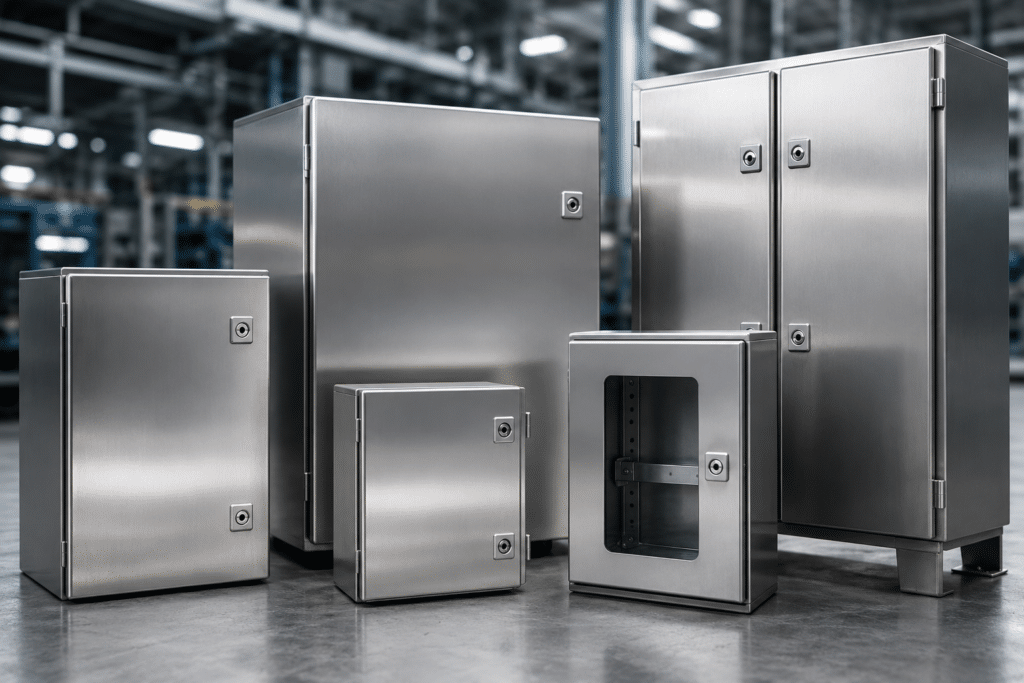
The choice of electrical enclosure directly impacts the reliability, safety, and maintenance costs of any industrial installation. However, the decision is often made too hastily, prioritizing price over actual operating conditions, which ultimately leads to premature breakdowns, production stoppages, and costly replacements.
This guide covers the fundamental technical criteria (material, IP rating, environment and regulations) to help you make a well-informed decision from the outset.
How to Prevent Corrosion in Industrial Electrical Enclosures

The breakdown came without warning. A production line at a food processing plant came to a halt first thing in the morning. The maintenance manager suspected a faulty sensor, a programming error, or a problem with the power components. He opened the electrical cabinet and found something else: rusty hinges, corrosion spots on the bottom of the enclosure, peeling paint around the cable entries, and a seal that had been failing for some time.
What appeared to be an electrical malfunction was, in fact, the culmination of a process that had been quietly unfolding for years.
Which electrical enclosure should you choose for damp areas or industrial laundry facilities?
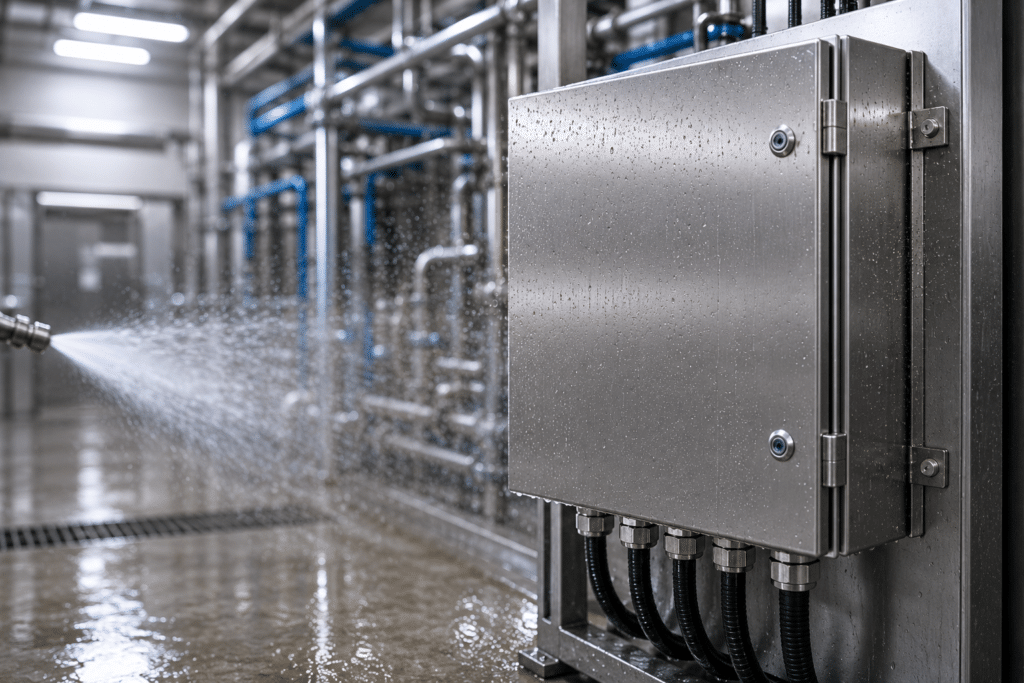
In industrial environments with high humidity, intensive cleaning cycles, or frequent water splashes, choosing the right electrical enclosure is no small matter. An improperly specified enclosure can begin to deteriorate within months: corrosion spreads from the inside toward the components, electrical failures multiply, and unplanned production downtime ends up costing far more than the price difference between a suitable solution and an inadequate one.
This guide explains what features an electrical enclosure for humid environments should have, which materials offer the best results depending on the type of environment, and how to interpret IP protection ratings to make an informed decision.
Stainless steel electrical cabinets in industrial environments: case of use in demanding conditions

Stainless steel switchgear is key in demanding industrial environments, where moisture, chemicals or intensive cleaning can compromise other materials. Choosing the right type of steel and switchgear design not only prevents failures, but also reduces maintenance and ensures long-term system stability.
Stainless steel switchgear: the decision that avoids problems in demanding industrial environments

The choice of material in switchgear is a critical factor in demanding industrial environments. This article discusses why stainless steel is the most reliable choice against moisture, chemicals or harsh conditions, and how its correct selection – together with proper design – can reduce failures, minimize maintenance and ensure long-term system stability.