
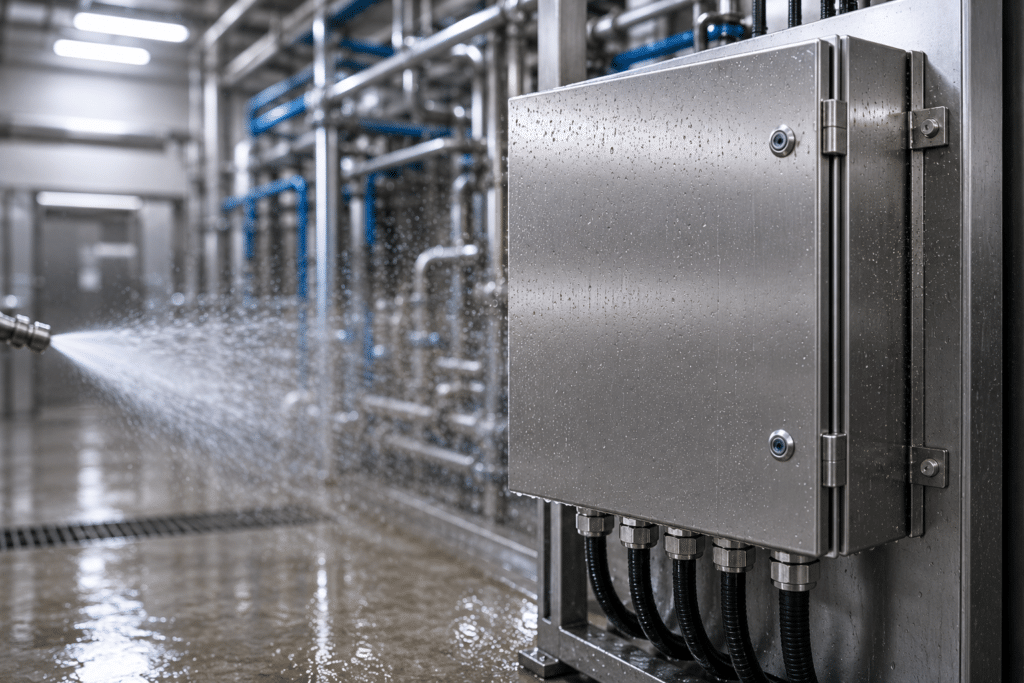
Why electrical enclosures for damp environments are different
A standard electrical cabinet is designed to operate under controlled environmental conditions: stable temperature, moderate humidity, and no direct exposure to water. When that same cabinet is installed in an industrial wash area, a cold storage room, a water treatment plant, or any environment with sustained high humidity, its performance deteriorates rapidly if it is not designed for such conditions.
Electrical enclosures for damp environments differ in three key ways:
Material: capable of withstanding corrosion caused by prolonged exposure to moisture, cleaning products, and, in some cases, chemicals used in the manufacturing process.
Water resistance: an IP rating sufficient to prevent water ingress under real-world conditions, not just under laboratory test conditions.
Hygienic design: In industries such as food and pharmaceuticals, the cabinet’s exterior surface must be easy to clean without cleaning products penetrating the interior or becoming trapped in joints, corners, or fasteners.
What is the most suitable material for an electrical cabinet in a damp area?
Material is the primary selection criterion in humid environments, and this decision directly affects the cabinet’s performance throughout its entire life cycle.
AISI 316L stainless steel: the gold standard for demanding wet environments
AISI 316L stainless steel is the material of choice for most industrial applications involving high humidity, aggressive cleaning products, or exposure to chemicals. Unlike AISI 304L, it contains molybdenum in its composition, which gives it significantly greater resistance to chlorides—found in most industrial disinfectants and in marine environments—and to localized pitting corrosion.
It is particularly suitable for use in the food and beverage, pharmaceutical, and chemical industries, as well as in water treatment and any environment where CIP or SIP cleaning cycles are routine.
AISI 304L stainless steel: suitable for moderately humid environments
AISI 304L offers good corrosion resistance in moderately humid conditions and when used with neutral or slightly alkaline cleaning products. It is a suitable choice for damp industrial facilities or outdoor installations where there is no exposure to chlorides or aggressive chemicals. However, in environments where chlorine is present in the air or where frequent cleaning with chlorinated disinfectants occurs, AISI 304L may develop localized corrosion over time; therefore, in such cases, AISI 316L is the correct specification.
What about painted steel or polyester?
Painted steel is not recommended for use in damp areas: any scratch or dent in the coating exposes the underlying carbon steel, which begins to corrode rapidly in the presence of moisture. Glass-reinforced polyester (GRP) is a valid alternative in certain outdoor or infrastructure applications where humidity is moderate and there are no intensive cleaning cycles, but its mechanical properties and resistance to aggressive chemicals are inferior to those of stainless steel.
IP Rating for Electrical Enclosures in Wet Areas: Which One Do You Need?
The IP rating (Ingress Protection, EN 60529 standard) is the standardized indicator that allows for an objective comparison of the level of water and dust resistance among different enclosures. In humid environments, choosing the correct IP rating is just as important as selecting the right material, because a stainless steel enclosure with an insufficient IP rating can still be damaged if water gets inside.

IP66 vs. IP69K: Which One to Choose for Industrial Washing Areas
The difference between IP66 and IP69K is significant in practice, even though both offer complete protection against dust. IP66 withstands high-pressure, high-flow water jets, such as those produced by a standard industrial hose. IP69K, on the other hand, is specifically designed to withstand cleaning with water at pressures between 80 and 100 bar and temperatures up to 80 °C, which are the typical conditions in facilities with strict hygiene protocols.
In a food or pharmaceutical facility where intensive daily cleaning is performed, specifying IP66 when the environment requires IP69K could result in the enclosure losing its watertight seal in less than a year, especially if water jets are directed directly at the gaskets or fasteners.
Electrical enclosures for damp environments by industrial sector
Protection requirements vary significantly depending on the sector and the type of production process. The following table summarizes the most common specifications by sector:

Food and Beverage Industry
This is the sector with the most stringent requirements. CIP (Cleaning In Place) and SIP (Sterilization In Place) protocols involve high-temperature, high-pressure water, along with alkaline cleaning agents and chlorine-based disinfectants. The de facto standard is AISI 316L stainless steel with a minimum IP66 rating and IP69K in areas subject to direct cleaning. A hygienic design—free of hard-to-reach internal corners, with smooth surfaces and stainless steel fasteners—is an additional requirement in many facilities in this sector.
Pharmaceuticals and Biotechnology
Hygiene requirements in the pharmaceutical industry are similar to or stricter than those in the food industry, with the distinction that cleaning and sterilization protocols are subject to regulatory validation. Electrical cabinets for humid environments in this sector must comply with GMP (Good Manufacturing Practices) standards and, in many cases, with the specific requirements of regulatory agencies such as the EMA or the FDA.
Water Treatment and Sanitation
Wastewater treatment plants combine very high ambient humidity with the presence of corrosive gases, primarily hydrogen sulfide (H₂S), and chemicals used in water treatment. Under these conditions, AISI 316 with IP66 or IP67 is the standard specification, supplemented by controlled ventilation in large enclosures to prevent internal condensation.
Common Mistakes When Choosing an Electrical Enclosure for Damp Locations
Specify an IP rating based on the minimum acceptable rating
The minimum IP rating required by regulations in a given environment is not necessarily the most appropriate for ensuring long-term reliability. In installations subject to frequent cleaning or sustained high humidity, it is advisable to specify an IP rating higher than the regulatory minimum, taking into account actual conditions of use rather than just nominal ones.
Ignoring the cleaning products used
A cabinet may pass IP waterproofing tests using clean water but deteriorate rapidly in the field if the cleaning products used are not compatible with the enclosure material or the seals. It is essential to verify the material’s chemical resistance to the specific cleaning agents used at the facility.
Choose AISI 304L when the environment requires AISI 316L
The price difference between the two materials sometimes leads to the use of AISI 304L in environments where chemical aggressiveness or the presence of chlorides would normally require AISI 316L. The cost of premature replacement of the cabinet and the components affected by corrosion far exceeds the initial savings.
Do not take indoor condensation into account
In environments with significant temperature fluctuations, internal condensation can cause electrical components to fail, even if the enclosure is completely airtight. In such cases, it is necessary to incorporate internal humidity control elements, such as thermostat-controlled heaters, desiccants, or filtered ventilation systems, to ensure that the internal temperature remains above the dew point.
Frequently Asked Questions About Electrical Enclosures for Humid Environments
What is the minimum IP rating for an industrial wash area?
The minimum recommended IP rating for industrial washdown areas is IP66, which guarantees protection against high-pressure water jets from any direction. In facilities that use high-pressure, high-temperature cleaning—common in the food, pharmaceutical, and automotive industries—IP69K is the industry standard, as it is the only rating that has been specifically tested to withstand water at 80–100 bar and up to 80 °C.
Can a painted steel cabinet be installed in a damp area?
This is not recommended. The coating on painted steel is susceptible to deterioration when exposed to prolonged moisture, cleaning products, and frequent mechanical impacts in industrial environments. Any damage to the coating (a scratch, a dent, or a small spot of corrosion) can spread rapidly in the presence of moisture. In damp areas, stainless steel or, for specific applications, reinforced polyester are the appropriate alternatives.
What kind of maintenance does an electrical panel in a damp area require?
Electrical enclosures for damp environments require periodic inspection of the gaskets, which can degrade over time and due to exposure to cleaning products, as well as checking the condition of the latches and hinges, and ensuring that no limescale, dirt, or chemical deposits have accumulated in the sealing areas. In installations with internal condensation, humidity control devices (heaters, desiccants) must be inspected at the intervals recommended by the manufacturer.
Is ATEX certification required in wet areas?
ATEX certification is required when there is a risk of explosive atmospheres due to the presence of flammable gases, vapors, or dust, regardless of whether the environment is damp or not. In wastewater treatment facilities, for example, the presence of methane or hydrogen sulfide can create potentially explosive atmospheres that require enclosures certified in accordance with the ATEX Directive 2014/34/EU, in addition to meeting the appropriate IP protection ratings for the damp environment.
Do you need an electrical cabinet for a damp area or laundry room?
At Volthree, we specialize in stainless steel electrical enclosures for demanding industrial environments: food processing, pharmaceuticals, chemicals, water treatment, and any facility where humidity, cleaning products, or harsh environmental conditions are part of everyday operations.
We analyze each project to recommend the most appropriate solution based on the actual installation environment, the required level of protection, and applicable regulatory requirements.