
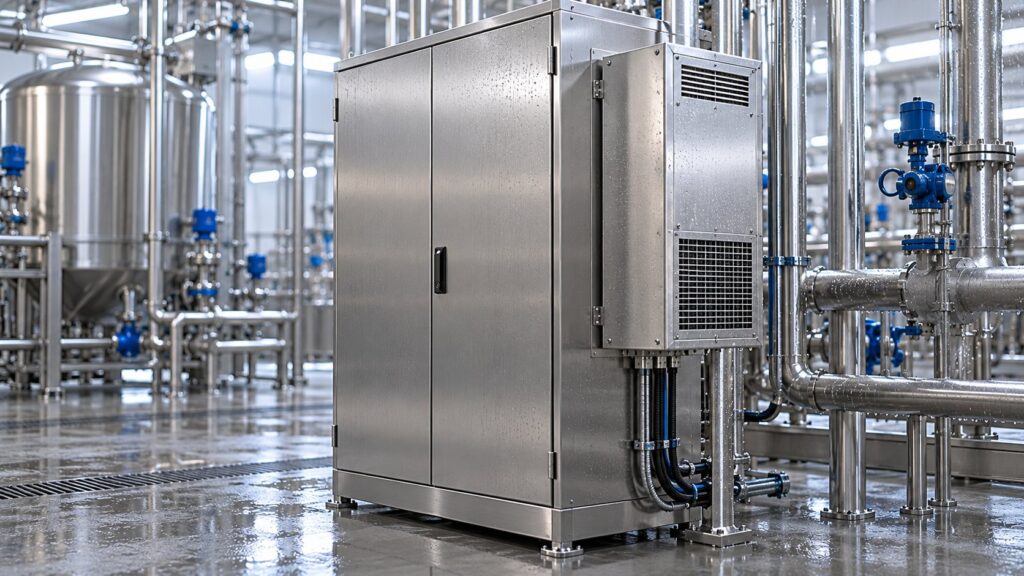
Drives, power supplies, PLCs and contactors generate heat continuously. Inside a closed enclosure, that heat builds up. That is why many “unexplained” failures in an electrical panel during summer have a thermal cause. At the opposite extreme, in humid areas or where there are sharp temperature swings between day and night, condensation appears: water droplets on terminals and electronic boards.
Why an electrical enclosure needs climate control
Heat shortens component life
Electronics are sensitive to temperature. A widely used rule of thumb in the industry states that, above the rated temperature, every additional 10 °C can halve the service life of many electronic components. In addition, drive and PLC manufacturers specify a maximum operating temperature, and exceeding it may affect the warranty.
The standard sets a reference limit
The low-voltage switchgear standard EN 61439 defines normal conditions as an ambient temperature not exceeding 40 °C, with a 24-hour average not exceeding 35 °C. Many designers set 35 °C as the target internal temperature of the enclosure.
Condensation causes corrosion and short circuits
When the humid air inside cools below its dew point, the vapour condenses on the coldest surfaces. This often happens at night, after a machine stoppage or after cleaning with hot water. The result is oxidised contacts, current leakage and intermittent faults.
Signs that your electrical panel has a thermal problem
- Drive trips or overtemperature alarms, especially in summer.
- Discoloured components or a smell of overheating.
- Water droplets or damp marks on the inside of the door or on the terminals.
- Corrosion on terminals, screws or the mounting plate.
- Intermittent faults that disappear when the door is opened.
Climate control systems for electrical enclosures

How to prevent condensation in electrical enclosures
- Install anti-condensation heaters controlled by a hygrostat, so that the interior stays a few degrees above ambient temperature when the machine is stopped.
- Keep the enclosure sealed: suitable cable glands, gaskets in good condition and sealed cable entries.
- Avoid opening the enclosure while hot in very humid environments or during cleaning.
- Manage condensate water from cooling units with proper drainage to the outside.
- Keep the enclosure away from the wall in cold or humid areas so that air can circulate behind it.
- Choose the right material: in humid areas, a stainless steel enclosure prevents condensation from turning into corrosion of the enclosure itself.
Climate control in hygienic and washdown environments
In the food, pharmaceutical or chemical industries, the climate control system must meet the same level of hygiene and protection as the enclosure. Some guidelines:
- Prioritise systems that keep the enclosure sealed (heat exchangers or cooling units) over filtered ventilation.
- Choose equipment with a stainless steel housing and high protection ratings.
- Check that the system can withstand the cleaning products and pressure used in the area.
- Position the climate control unit so that it does not create areas where dirt can build up.
Climate control systems and accessories at Volthree
At Volthree we help you choose the right thermal management solution for your stainless steel electrical enclosures, based on the dissipated power, the enclosure volume and the environment. In our installation accessories category you will find:
- Ventilation systems and ventilation protection (grilles and filters).
- Temperature control: thermostats, hygrostats and sensors.
- Cable glands and cable entry systems that keep the enclosure sealed.
Frequently asked questions about electrical enclosure climate control
Why does an electrical enclosure need climate control?
Because components generate heat, and excessive temperature reduces their service life and reliability. Climate control keeps the interior within the safe operating range.
Ventilation or a cooling unit for an electrical panel?
Ventilation if the outside air is cooler than the desired internal temperature and the environment allows it. A cooling unit if you need to cool below ambient temperature or maintain a high IP rating.
What temperature should the inside of an electrical enclosure be?
As a reference, many designers set 35 °C, in line with the service conditions of EN 61439. The maximum specified by the manufacturer of each component must always be respected.
How do you prevent condensation in an electrical panel?
With heaters controlled by a hygrostat, good sealing, drainage of the condensate from cooling units and an enclosure material that is resistant to moisture.
Does ventilation reduce the IP rating of the enclosure?
Yes. Filter fans usually limit the protection rating, typically to IP54-IP55. If IP66 or higher is required, you need to opt for heat exchangers or cooling units.
Is your electrical panel affected by heat or condensation? Tell us about your setup, and we’ll help you find a solution. Contact Volthree.